Art on superyachts: design, conservation and innovation

Vuoi salvare articoli per un rapido accesso?
Sali a bordo della community DN Plus.
Per te, un'area riservata con: approfondimenti esclusivi, i tuoi articoli preferiti, contenuti personalizzati e altri vantaggi speciali
Accedi RegistratiArt on superyachts is no longer simply a decorative element, but a sphere that unites design, conservation and innovation
Art on superyachts is no longer simply a decorative element, but a sphere that unites design, conservation and innovation
Works of art, be they antique or contemporary, on board superyachts, has evolved far beyond the decorative. Today, this passion requires a structured and coordinated approach that includes designers., shipyards, art consultants and legal specialists. Collectors want to enjoy their cruises surrounded by their collections of fine or decorative arts located in their home on land, transforming their yachts into a space that is curated to the tiniest detail, yet subjected to particularly difficult environmental conditions for these types of pieces.
The connection between art and private yachts is rooted in history, from ancient ceremonial vessels, like Caligula’s ships, through to the large private yachts of collectors in the twentieth century, like JP Morgan on board his Corsair. What makes the contemporary approach different is the level of attention and protection required today: art on board needs to follow high conservation standards, advanced design solutions and an increasingly stringent provisions.
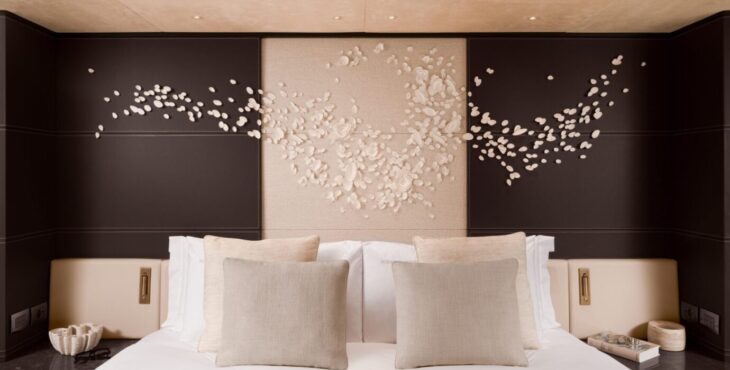
Design is the starting point From the earliest phase of the project, the shipyards work alongside art professionals to guarantee a stable climate, controlled lighting and appropriate materials. Dedicated systems for temperature and humidity control, along with selected finishes, protects works on canvas, paper, or delicate materials. Art is no longer added at the end, but becomes an integral part of the architecture. An emblematic example is the Benetti Asani, where a custom made piece in porcelain dialogues directly with the interior and requires carefully calibrated environmental conditions.
Sailing adds specific crucial requirements. Constant movement and vibrations could compromise the integrity of the piece over time. For this reason, fixing solutions are studied and used to absorb strains and reduce risks. Even transportation and installation follow rigorous protocols, similar to those used in museums, with specialised personnel and safe anchoring systems.
Conservation then continues during daily life on board. The crew receives special training on monitoring environmental conditions, correctly managing lighting and intervening only in case of emergency. Maintenance works is discreet and non-invasive, supported by registers that record the conditions of the space. Aspects life security and insurance also influence on display choices, sometimes leading to the use of copies while the originals remain on land.
Even regulations have taken on a central role. Laws that regulate the transport of cultural assets and sensitive materials require specific documentation and a preventative plan. Advanced digital tools contribute to guarantee tracking, authenticity and transparency.
Innovative projects like ArtExplorer, created as a travelling exhibition space open to the public, demonstrate how the connection between art and superyachts can lead to new cultural models. In this context, art on board becomes an expression of a vision that combines aesthetics, responsibility and innovation, redefining the cultural experience at sea.